
Federal Reserve Adaptive Reuse
An 18,500-square-foot historic landmark in Jacksonville converted from an abandoned Federal Reserve Building into a mixed-use development with restaurants, event space, and an exterior courtyard.
Bringing a Historic Landmark Back to Life
The Federal Reserve Adaptive Reuse project required BIM coordination around existing conditions, historic limitations, inaccessible areas, and full building system replacement.
Federal Reserve Adaptive Reuse
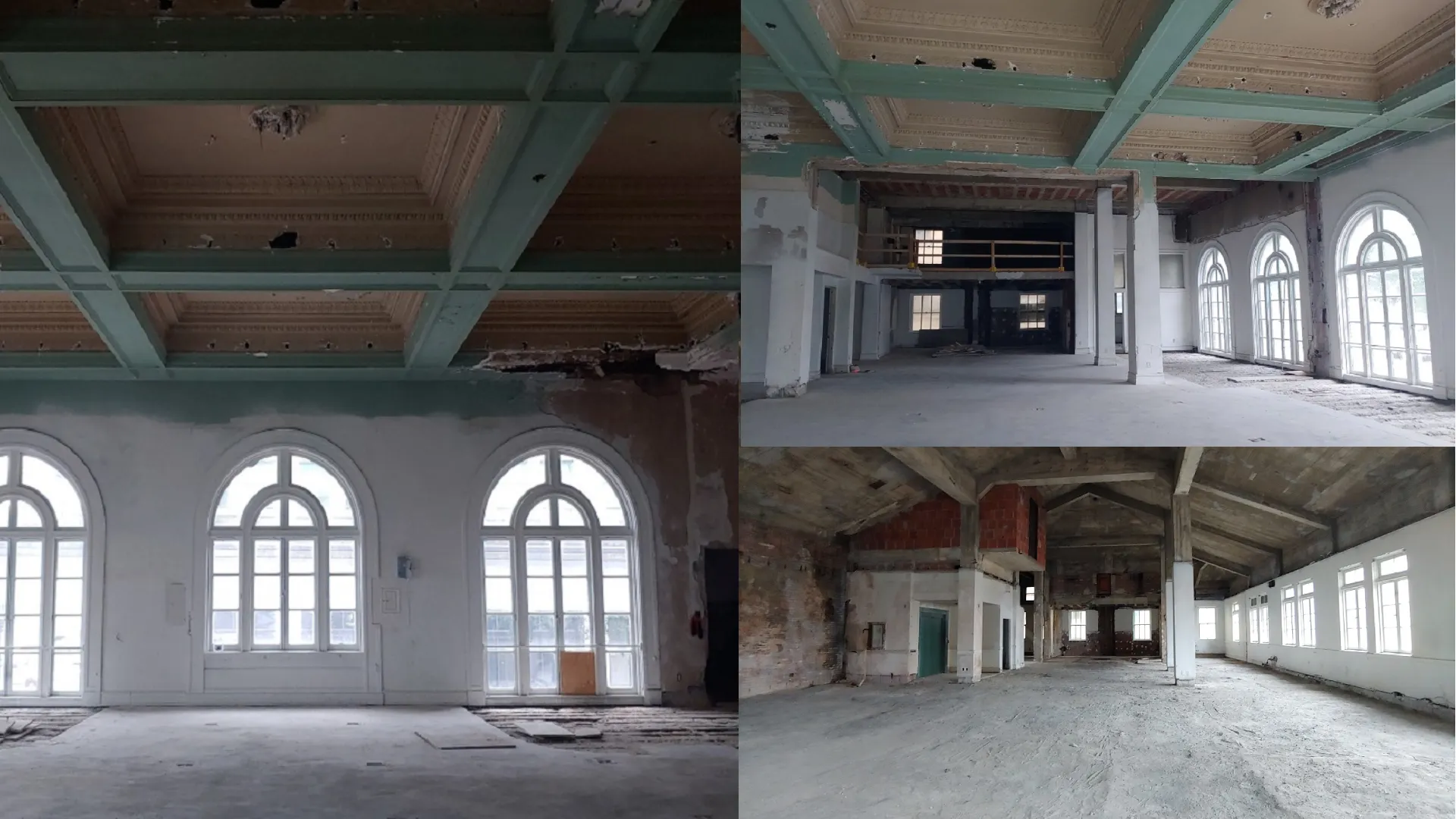
The Federal Reserve Building is an 18,500-square-foot building constructed in 1923 and is a National Historic Landmark. The building has been abandoned for approximately 40+ years and will be converted into a mixed-use development, including multiple restaurants, banquet/event space, and an exterior courtyard.
The building required a complete replacement of building systems, including HVAC, electrical, plumbing, technology, and more.
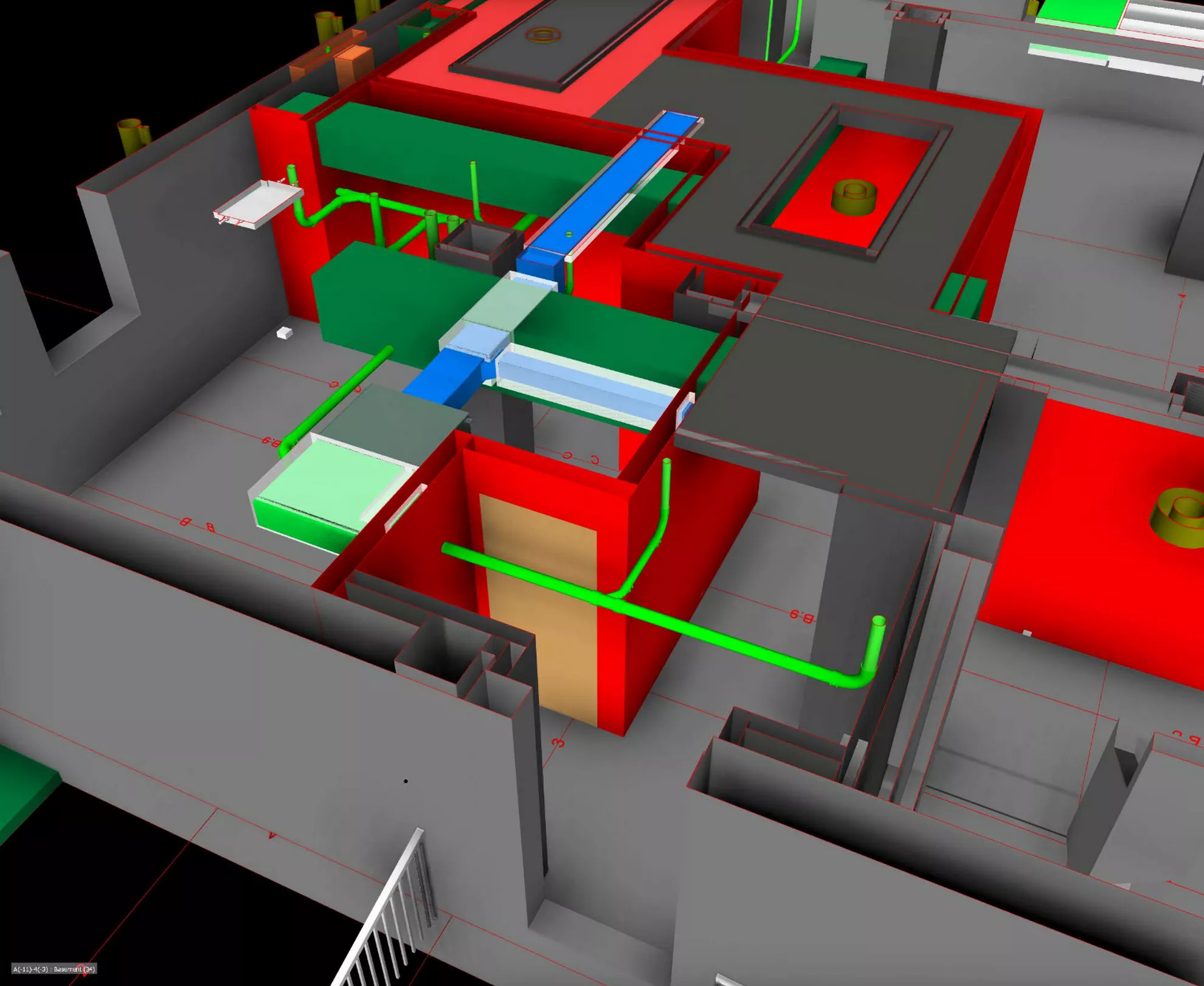
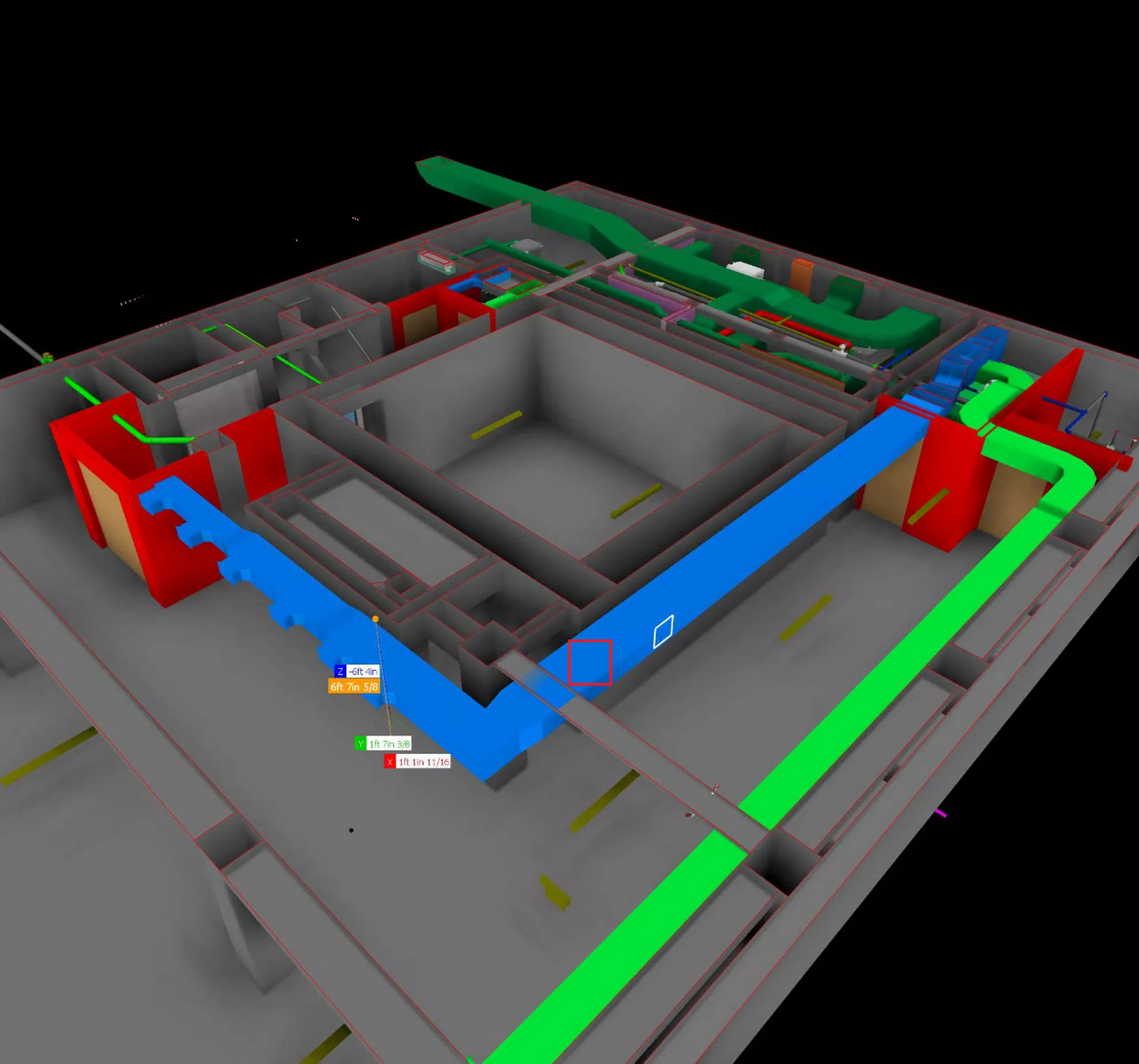
The project was designed in 2D AutoCAD; therefore, 3D coordination was only done after BIMWerx became involved. The contractor understood how complex the project would be and hired BIMWerx to model the architectural, mechanical, electrical, and plumbing systems and coordinate with the rest of the team.
The building was scanned and converted to a Revit structural model after demolition. Due to the historical nature of the building, there was a large amount of coordination with the existing conditions that was only possible with the BIM coordination process.
Coordinating Around Existing Conditions
Historic adaptive reuse requires a deep understanding of what exists, what changed after demolition, and what must be coordinated before construction moves forward.
Solving the Unknowns Inside a Historic Building
The project was complex for being a smaller project. The point cloud scan found many of the as-built assumptions needed to be corrected, adding to the complexity.
Due to the state of the building, multiple areas could not be accessed during the collection of as-built information during the design process. This led to floor-to-floor heights needing to be accurately documented, walls being thicker than shown on the drawings, and some HVAC elements not being accounted for.
Each level was unique and had different heights within the level. BIMWerx was mindful that certain ceiling elements and asbestos-laden areas had to be avoided.
Removing Unknowns Before They Became Change Orders
The process took approximately 10 weeks and close to 580 hours to complete. BIMWerx was made aware on multiple occasions that this project would have seen construction schedule overruns and numerous change orders.
The team was able to remove nearly all unknowns and streamline the installation process.
Project Impact
Need BIM Support for a Complex Adaptive Reuse Project?
BIMWerx helps project teams coordinate existing conditions, identify conflicts early, and move construction forward with clearer project information.